Music & Architecture
Music theory, composition, architecture, and drafting formed two early ways of thinking about structure: one in time, one in space.
About · A Creative Life
Words, music, photography, architecture—and the patterns that carry across them.
The Pattern
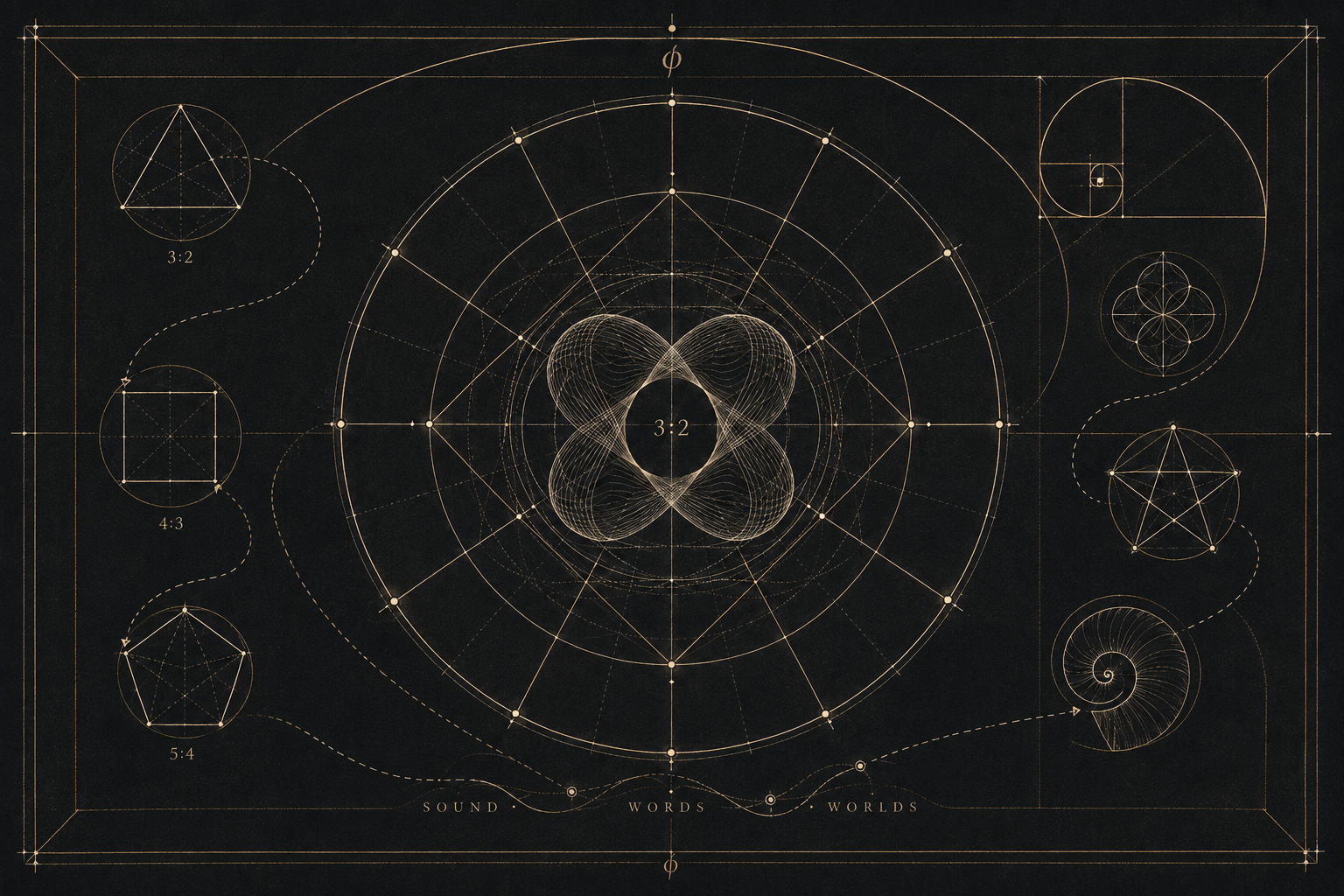
The Quadrivium gave me a way to name something I had already felt: the disciplines are not isolated. A pattern can be heard, drawn, built, photographed, or written. Change the medium and the pattern changes with it—but something survives the translation.
Music becomes image. Image becomes architecture. Architecture becomes atmosphere. Literature becomes sound. Sound returns to words. What can look like a scattered creative life is, for me, one connected practice viewed from different angles.
Influence note · This page draws visual and conceptual inspiration from Quadrivium: The Four Classical Liberal Arts of Number, Geometry, Music & Cosmology, particularly its exploration of number, geometry, harmony, proportion, and the relationships between them.
The Sounds
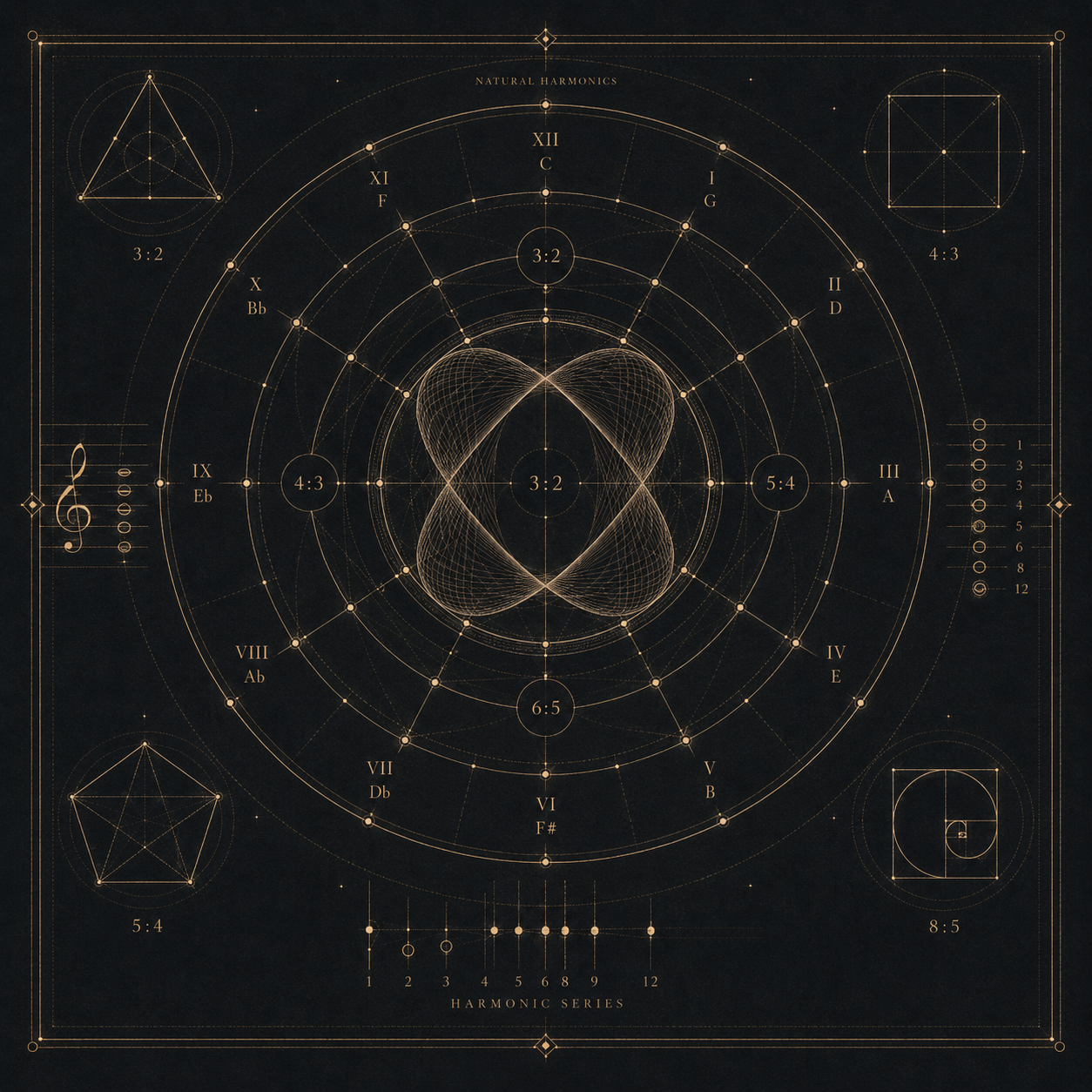
The music I return to is rarely confined to one genre. Classical music, metal, darkwave, orchestral writing, and theatrical composition meet in the same place for me: atmosphere, structure, repetition, and transformation.
Grieg, Iron Maiden, Savatage, Trans-Siberian Orchestra, Sopor Aeternus, and others taught me that music can behave like a world—carrying narrative, memory, visual imagination, and emotional architecture beyond the recording itself.
Those sounds shape not only what I listen for, but how I think about pacing, return, tension, and scale in every other medium I work in.
The Shelf
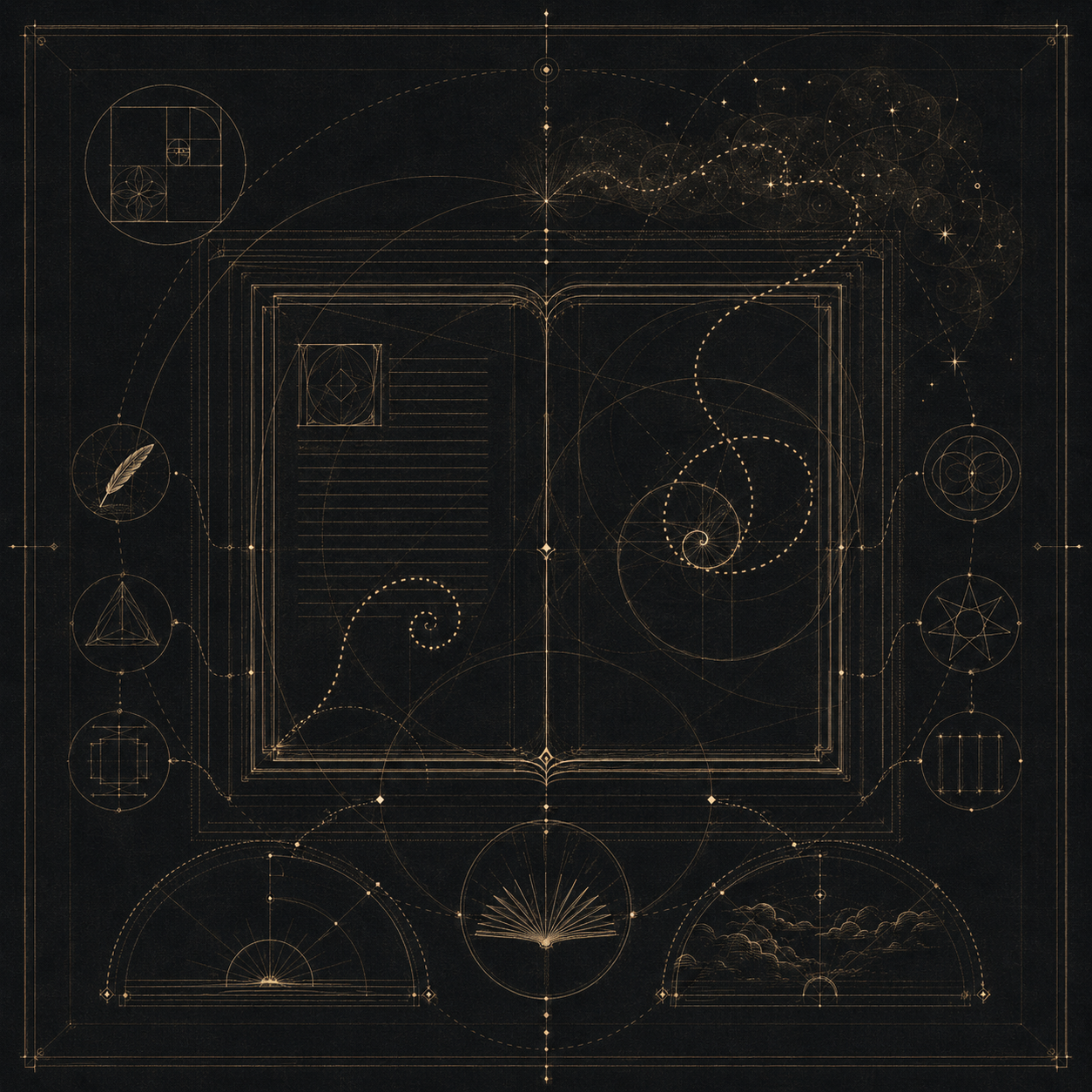
Books have never remained only books. The writers I return to become atmospheres, visual textures, rhythms, and musical instincts as much as literary influences.
Coleridge, Poe, Lovecraft, Keats, Barker, and the old volumes that carry them all hold something beyond language alone: strangeness, mood, architecture, image, and the feeling that another world is pressing through the page.
Literature gives me narrative and voice, but it also gives me weather, silence, scale, and symbolic pattern—the things that continue to surface in both my writing and my music.
The Worlds
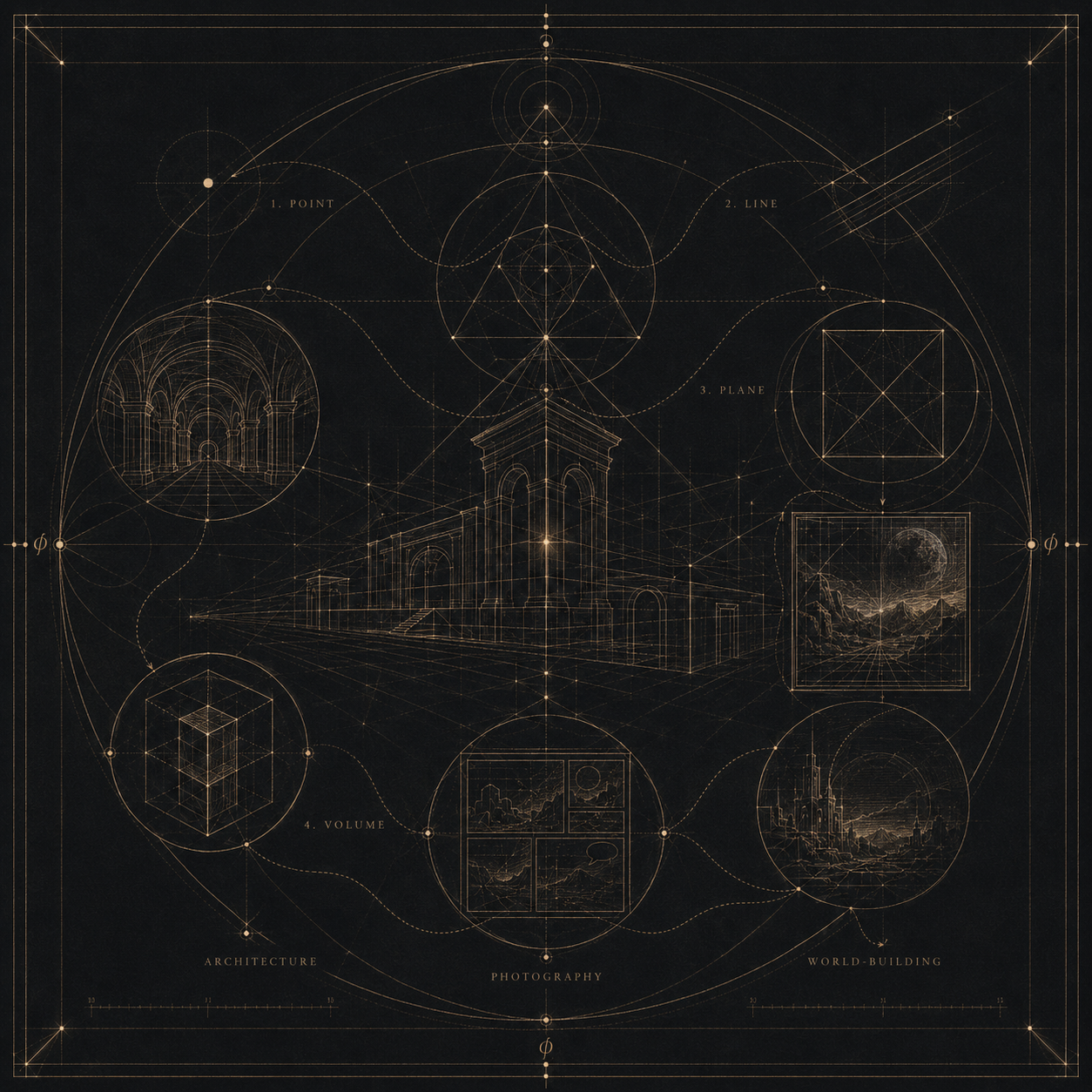
Visual work has always been tied to how I understand space. Architecture taught me structure, proportion, and movement. Photography taught me framing, attention, and the emotional weight of a place.
Comics, graphic storytelling, and design sit in the same continuum: each is a way of constructing an immersive world, whether through image, sequence, composition, or atmosphere.
This is where the circle closes. A world can begin as geometry, become image, turn into story, and ask for music. Each discipline changes the form, but the underlying impulse remains the same: to build something another person can enter.
Along the Way
The full story is longer than a timeline needs to be. These are some of the turns where one discipline began feeding another.
Music theory, composition, architecture, and drafting formed two early ways of thinking about structure: one in time, one in space.
Architecture, fencing, hospitality, and Pirates Alley became part of a life built around place, performance, and reinvention.
Drafting moved from paper into built environments, including Pirates Alley and Ocean Village.
After Hurricane Ike, photography became a way to preserve places and moments that could disappear almost overnight.
Fiction, poetry, and graphic storytelling brought the old patterns back in another form: atmosphere, repetition, image, and world-building.
Composition and Bedlam Pariah reopened the path between orchestration, heavy music, narrative, and visual imagination.
CueForge and CueForge Score extend the same impulse into interactive systems for sound, storytelling, and creative structure.
Writing, music, photography, editorial design, and visual storytelling no longer feel like separate pursuits. They keep becoming one another.
Visual Archive